



Your Cart is Empty
A clearer way to use this tool
The useful result is a clearer food plan. You can compare a general adult reference with a sports nutrition range, enter the protein you expect from meals, and explore a shake contribution without being told that more is always better. The numbers are estimates for planning, not a diagnosis or a personalized prescription.
Start With the Reference That Fits Your Question
The general adult option uses 0.8 grams of protein per kilogram of body weight as a reference. The sports option displays 1.2 to 2.0 grams per kilogram, reflecting a commonly cited sports nutrition range. These options describe different contexts; they are not levels you should work through to achieve a higher score. [1]
If a qualified professional has already given you a specific daily target, use the custom target option. It lets you explore food and shake contributions without replacing that advice with a generic formula. Keep the original recommendation in view, especially when it is part of a medical nutrition plan.
The calculator is intended for adults planning ordinary food intake. Pregnancy, breastfeeding, kidney disease, prescribed protein restrictions, and other individualized nutrition needs require guidance beyond this tool. Choose the reference because it answers your question, not because the largest number looks more ambitious.
How the Protein Calculation Works
Weight in pounds is divided by 2.20462 to estimate kilograms. Weight in kilograms is used directly. The calculator then multiplies that weight by the selected grams-per-kilogram reference. The equation remains visible so you can understand where the result came from.
For an illustrative person weighing 70 kilograms, the general reference produces 56 grams per day. Selecting the athletic range produces 84 to 140 grams. Those are outputs from the chosen references, not proof that the illustrative person needs the higher amount. The right context matters as much as the multiplication.
Daily needs do not become perfectly precise because a calculator displays a decimal. Results are rounded for readability, while the underlying arithmetic keeps its precision. A small change in body weight should not turn your food routine into a constant recalculation project.
Add the Protein You Already Expect From Food
Enter the approximate protein you expect from your usual meals. Check food labels when possible and use realistic portions. This field is optional, but it makes the shake comparison more meaningful because you can see the contribution from food before adding another product.
A partial food estimate should stay partial. If you only know breakfast and lunch, the calculator cannot claim that the difference represents a complete daily shortfall. Use the result as an illustration and return when you have a more representative estimate.
You can also compare two ordinary days. One might include a prepared lunch, while another involves travel or a busy schedule. The aim is to identify where a convenient option would help, not to create a perfect number that every meal must support in exactly the same way.
See What a Shake Adds
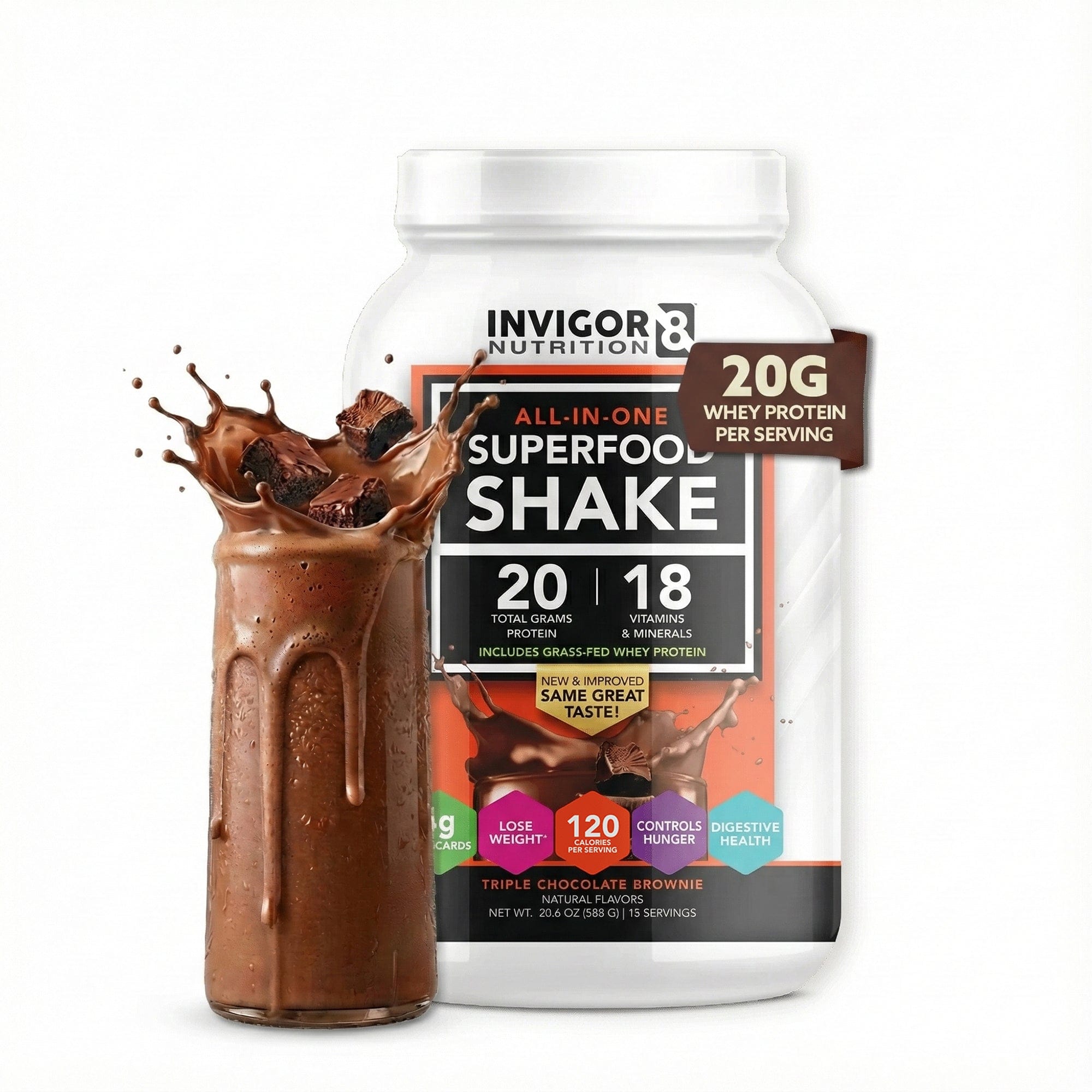
The shake control changes the number of labeled servings in your plan. A full INVIGOR8 serving is two scoops and supplies 20 grams of protein on the reviewed labels. Half a serving is one scoop and contributes 10 grams. Keep scoops and servings separate when entering your plan. [2]
The result displays food protein, shake protein, and the combined estimate. If you entered a target, the calculator also shows the remaining arithmetic difference. It does not automatically round that difference up and tell you to drink a certain number of shakes.
That distinction keeps the decision practical. You might prefer another food, a different meal portion, or no change until you have professional advice. The tool gives you a transparent comparison so the product can earn its place through convenience and suitability.
Protein per Meal Is a Planning View
The meal distribution view divides your selected daily reference across the number of eating occasions you choose. It is a simple equal-split illustration, not a claim that all meals must contain identical amounts or that the split is individually optimal.
Use it to think about preparation. A day with three main meals may look different from one with smaller meals and snacks. If breakfast is consistently rushed, an easy option might be useful there even when dinner already includes a substantial protein food.
Do not rearrange meals solely to make every bar the same length. Food enjoyment, appetite, practical access, and professional guidance belong in the decision too. A chart is helpful when it makes a routine easier to understand; it should not become another rule you feel compelled to follow.
Choose a Shake for the Role You Need
A protein shake can be a convenient addition to breakfast, an ingredient in a smoothie, or a planned snack. Those roles differ from replacing the full nutrition of a meal. Read the complete product information before deciding what you expect the drink to provide.
Consider preparation, taste, dietary requirements, and how often you would actually use the product. A formula with an appealing protein amount is only useful if it fits your day. You do not need to replace a food you enjoy simply because a shake is available.
INVIGOR8 Superfood Shake appears alongside the calculation so you can inspect the product without leaving your planning task behind. Open its current label, choose a flavor, and compare the serving you would really prepare. The product link is an option, not a required next step.
Remember the Liquid and Extras
The protein contribution shown here comes from the powder serving. Milk, yogurt, or other ingredients can contribute additional protein and change the finished drink's nutrition. Water does not contribute protein, but different dairy and nondairy drinks vary substantially.
Use the shake calorie and macro builder when you want a prepared-recipe total. That tool keeps the powder, liquid, and add-ins visible together. It helps answer a different question from this calculator: what is in the drink you plan to make?
Keeping those tasks separate reduces confusion. This page explores a daily reference and a shake contribution. The recipe builder adds the nutrition of a finished drink. Neither tool should pretend that a protein number describes everything that matters about your food routine.
Avoid Turning a Reference Into a Challenge
A higher number is not an achievement by itself. Once you have selected an appropriate reference, consider how it fits with the rest of your diet rather than trying to exceed it. The calculator does not award points for extra servings or label a larger total as better.
If the result surprises you, check the inputs first. Make sure the unit is correct, the food estimate is realistic, and the selected context matches your question. Confusing pounds with kilograms can change the calculation much more than a small difference between foods.
If the question remains personal or medically important, bring the result to a dietitian or clinician. Include your usual foods and exact product label. A professional can interpret context that the calculator does not collect, including medical history, overall intake, and the reason you are considering a change.
Make Shopping Quantities Match Your Plan
Once you know how often you expect to use a shake, consider the package serving count. The reviewed INVIGOR8 labels list 15 servings per container. A planned serving is two scoops, so counting scoops as full servings would overstate how long the container lasts. [2]
Use the travel planner for a defined trip and your intended serving schedule. It calculates dry powder weight from the selected flavor's labeled grams per serving. For everyday use, keep the plan realistic and review current package information before ordering.
Subscriptions can be convenient when the schedule matches actual use. Check the current terms and delivery choices rather than assuming a fixed monthly order is right for everyone. A useful routine should make preparation easier, including the practical business of keeping the amount you need on hand.
Use the Result as a Conversation Starter
Print your plan if you want to discuss it with someone helping you organize meals. The summary includes your weight unit, selected reference, food estimate, and shake contribution. That information makes the result understandable after you close the page.
Be clear about estimates and omissions. If your food input was a rough guess, say so. If you chose the athletic option only to explore the numbers, do not present it as a professionally recommended target. An honest explanation is more useful than a polished total without context.
The best outcome is a manageable next step. You might check breakfast labels, compare a prepared shake, or ask for individualized advice. Start with the information you have, keep the assumptions visible, and let the calculation support your food decisions rather than dictate them.
A few more answers
Frequently asked questions
How much protein do I need each day?
Your circumstances affect the answer. This calculator shows a general adult reference, a sports nutrition range, or a custom target you supply. It cannot determine which is appropriate for a medical condition or replace a professional assessment of your diet and health.
How many protein shakes should I drink a day?
There is no universal shake count. Start with food, the purpose of the shake, and any individualized guidance. The tool shows what a selected serving contributes and leaves the remaining food decision open. It does not prescribe shakes to fill every numerical difference.
Is one scoop one serving of INVIGOR8?
The reviewed labels define a serving as two scoops, containing 20 grams of protein. One scoop is half of that labeled serving. Always check your actual package because formulas and directions can change. The calculator displays both servings and scoops to reduce confusion.
Can I enter my own protein target?
Yes. Choose the custom daily target and enter the amount in grams. The calculator then compares your food estimate and selected shake servings with that value. It does not verify the target's suitability or override the guidance of the professional who supplied it.
Does this include protein from milk?
Not automatically. This calculator shows the powder contribution. Add any milk protein to your food estimate or use the separate shake builder for a prepared-drink calculation. Use your actual milk label because different products contribute different amounts.
Should I choose the athletic range for weight loss?
Do not select it solely because you want a larger result. The sports reference reflects an athletic context. If you want an individualized plan for weight management, ask a qualified nutrition professional. This calculator does not prescribe a weight-loss diet or guarantee changes in body composition.
Can I use this with a prescribed protein restriction?
Use the target provided by your healthcare team and seek their advice before changing intake. The general options are not designed to assess a medical restriction. You can print the arithmetic summary, but it should support your care plan rather than replace it.
Sources and reference notes
[1] NIH ODS protein references and athletic nutrition ↗[2] INVIGOR8 current nutrition labels ↗Product label images reviewed October 20, 2026. Generic food and recipe presets are illustrative, editable estimates. Check current package information and official travel rules. No personal health information is saved by these tools.
For educational planning only. Consult a qualified healthcare professional for individualized nutrition needs. The tools do not diagnose, treat, cure, or prevent disease. These statements have not been evaluated by the Food and Drug Administration.