



Your Cart is Empty
A clearer way to use this tool
Choose your INVIGOR8 flavor or enter your own labeled serving weight. Add the days when you expect to use it, choose your number of servings, and include an optional spare portion. The result separates food planning from airport screening guidance so a simple weight calculation is never mistaken for permission to carry an item through security.
Plan the Servings You Expect to Use
Start with the number of days when a shake will have a practical role. That may be fewer than the full trip length. If breakfast is provided or you expect to eat your usual foods, there is no reason to assume you need a shake simply because you are away from home.
Then choose labeled servings per day. Half a serving and a full serving are different amounts, and a scoop may not be the label's complete portion. The planner keeps the serving definition visible so you do not accidentally double the amount you intend to pack.
You can add spare servings for a specific contingency, such as an extra morning away. The tool does not automatically add a large buffer. You decide whether a spare portion is useful and can see exactly how it changes the packing estimate.
How the Packing Calculation Works
The planner multiplies planned days by labeled servings per day, then adds any spare servings. It multiplies that total by the selected dry serving weight. This produces a powder estimate in grams, with an optional weight conversion to ounces.
For example, five days at one serving each plus one spare serving equals six servings. A powder labeled 39 grams per serving would require 234 grams for that plan. This example explains the multiplication; it does not describe a container's volume or establish airline permission.
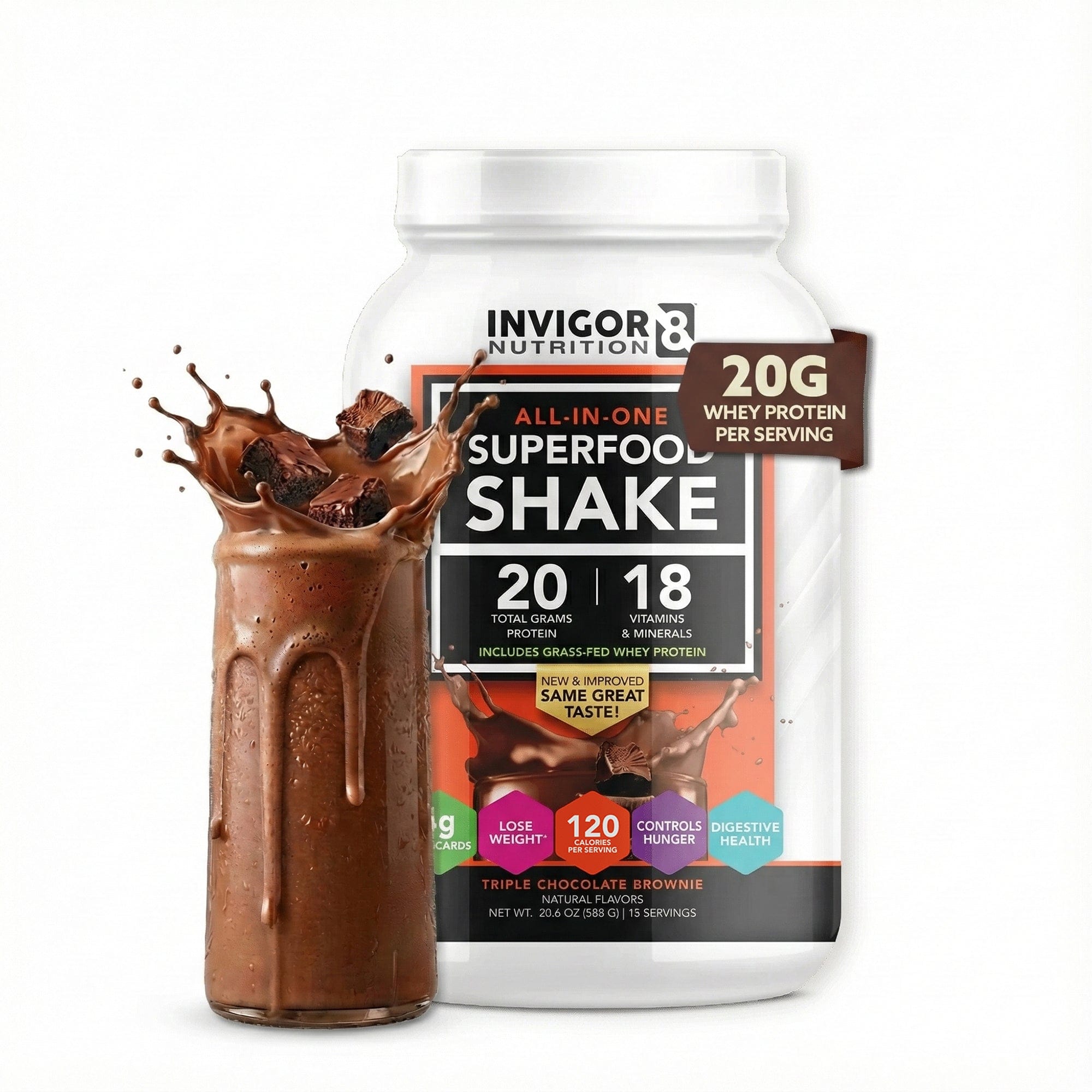
The result also shows the labeled scoop count when the selected product defines it. With INVIGOR8, two scoops make one serving on the reviewed labels. Six full servings therefore correspond to twelve labeled scoops, while the grams depend on the flavor. [1]
Choose the Correct Flavor Before Weighing
The reviewed two-scoop serving weights are 39 grams for Chocolate Brownie, 32.2 grams for French Vanilla, 33.5 grams for Natural Strawberry, and 31.8 grams for Salted Caramel. The planner uses the selected label rather than assuming every powder has the same density or scoop weight. [1]
Check the package you are taking. If its panel differs, use the custom serving-weight field. A familiar product name does not guarantee that every older package or flavor has the same serving definition.
Weighing the amount can make portion planning easier, but it does not replace safe food handling or travel requirements. The planner estimates how much you intend to use. Your packaging choice still needs to keep the powder dry, clearly identifiable, and appropriate for the conditions of your trip.
Do Not Confuse Weight With Volume
Grams describe mass. Milliliters describe volume. A container holding a given weight of powder does not automatically occupy the same number of milliliters. Powder density, settling, and the container shape can affect the relationship.
That distinction matters because TSA powder guidance uses a volume-based reference: powder-like substances greater than 12 ounces or 350 milliliters may need separate screening. You should not compare a 350-gram powder estimate directly with a 350-milliliter reference. [2]
If you know your container's marked capacity, enter it separately. The planner can display a relevant screening reminder, but it does not calculate container volume from powder weight. If the capacity is unknown, the correct result is a prompt to check it, not a confident all-clear.
Understand the US Carry-On Powder Guidance
TSA states that powder-like substances greater than 12 ounces or 350 milliliters must be placed in a separate bin for X-ray screening and may require additional screening. If a powder cannot be resolved at the checkpoint, it may not be allowed in the cabin. The final screening decision belongs to the officers. [2]
Use that information as preparation guidance, not a promise about a particular bag. Smaller containers are not automatically exempt from inspection. Keep time in your airport plan for screening and follow instructions at the checkpoint.
The planner shows the official source and review date beside the travel reminder. Check it again close to departure because rules, local procedures, and route requirements can change. A saved packing summary should never be treated as a permanent travel authorization.
Match the Checklist to Your Bag
Choose carry-on, checked bag, or a nonflight trip. The serving and powder calculation stays the same, while the checklist changes to reflect the packing question. A carry-on plan emphasizes checking screening rules; a checked-bag plan emphasizes secure packaging and access after arrival.
Think about when you need the powder. If your checked bag is unavailable during a connection, a recipe planned for that period may not be practical. You might choose a different food option rather than packing more powder into the wrong bag.
For a road or rail trip, airport powder rules may not apply, but preparation and storage still matter. Plan the trip you are actually taking. The tool should reduce irrelevant reminders rather than displaying the same airport message to every traveler.
Keep Product Information With the Powder
Original packaging makes the product name, ingredients, and serving directions easy to find. If you portion the powder into another suitable container, keep a readable copy of that information. A label photo can be useful for your own reference, but it is not a guarantee that every authority will accept a repacked product.
Choose packaging that closes securely and is suitable for food. Consider a second protective bag for accidental spills. Keep the measuring utensil clean and dry rather than leaving a damp scoop inside the powder.
If you travel with someone who has dietary requirements, avoid assuming that all powders are interchangeable. Keep their own product information accessible. A clear record helps with ordinary meal planning as well as questions that may arise while you are away.
Plan Where You Will Mix It
Powder is only one part of the plan. Will you have drinking water, your preferred liquid, and a suitable cup or shaker? A recipe that needs a blender may not work in a hotel room or on a train.
Use the checklist to think through the simplest realistic preparation. If you normally use milk or yogurt, consider whether refrigeration will be available. Do not assume a mixed drink can be stored safely for an entire travel day; follow product directions and appropriate food-handling guidance.
The shake builder can help you compare a simpler travel recipe with your usual preparation. Keep that recipe decision separate from screening rules. A drink that fits your food preferences still needs to follow any applicable liquid restrictions and destination requirements.
Check International and Destination Requirements
TSA guidance concerns US security screening. International departures, connections, customs, and agricultural rules can differ. A product containing dairy or botanical ingredients may raise a different entry question from whether powder can be screened at the airport.
Before traveling internationally, check the official authorities for your departure, transit, and destination locations. Use the actual ingredients of the product you intend to take. Do not rely on another traveler's experience as proof that your route and product will be handled identically.
The planner does not maintain a complete country-by-country import database. Its role is to make your serving plan and questions visible. The printable checklist includes a reminder to verify the route, so an accurate powder estimate is not mistaken for a complete international packing assessment.
Use a Realistic Spare-Portion Plan
An extra serving can be useful when you have a defined reason for it. Add it explicitly so you can see the additional grams and portions. Avoid packing a whole extra container simply because uncertainty makes that feel easier.
If you are trying to reduce luggage, compare the plan with and without spare portions. You may decide that a local food option is a better backup. The planner does not encourage you to replace all travel meals with shakes or to use more servings than you normally would.
For group travel, calculate your own plan rather than assuming everyone will use the same product and amount. Preferences, dietary requirements, and actual schedules differ. Separate labels and portions can make a shared packing task less confusing.
Print a Plan You Can Check Before Leaving
The printable summary includes your selected product, labeled serving weight, planned servings, spare portions, powder estimate, and bag-specific reminders. Check the boxes as you pack. The list is useful because it keeps quantities and practical preparation together.
Recalculate when the itinerary changes. An extra night, a different flavor, or a revised serving plan can change the amount. If you switch bags, revisit the screening checklist even when the powder weight stays the same.
Good travel planning leaves room for ordinary life. You do not need a perfect food routine while away. Use the planner to bring an appropriate amount of a product you enjoy, prepare it realistically, and verify the rules that apply to your trip.
A few more answers
Frequently asked questions
Can you bring protein powder on a plane?
TSA provides guidance for protein and energy powders, including additional screening considerations for larger quantities by volume. Check the official page and your route requirements. The planner does not authorize an item or guarantee a particular screening outcome.
Does 350 grams equal the TSA powder reference?
No. Grams describe weight and milliliters describe volume. The tool does not convert powder grams into container volume because that requires density information. Enter marked container capacity separately and use the official rule rather than assuming the numbers are interchangeable.
How much protein powder should I pack?
Multiply the servings you actually plan to use by the labeled grams per serving, then add any deliberate spare portions. The planner performs that arithmetic. It does not decide your daily nutrition needs or recommend replacing more meals with shakes while traveling.
Can I repack powder into small containers?
Consider food-safe packaging, clear product information, and the requirements of your route. Repacking does not guarantee acceptance at security or customs. Original labels can make ingredients and serving directions easier to identify, but official authorities make the applicable decisions.
Do all INVIGOR8 flavors weigh the same?
No. The reviewed two-scoop serving weights differ by flavor. Select the one on your actual package or enter a custom value. The planner keeps the serving weight visible so the packing estimate can be checked before departure.
Is this planner valid for international customs?
It does not determine import eligibility. Check official destination and transit requirements using the actual product ingredients. Airport security screening and customs entry are separate questions, and a product allowed through one process may still need review under another.
Can I save the checklist without an email?
Yes. Print the plan directly from the result. The checklist includes your quantities and the source reminder so you can review the relevant official guidance close to departure. No account or purchase is needed to use the planning information.
Sources and reference notes
[1] INVIGOR8 flavor serving weights ↗[2] TSA official protein and energy powder guidance ↗Product label images reviewed October 20, 2026. Generic food and recipe presets are illustrative, editable estimates. Check current package information and official travel rules. No personal health information is saved by these tools.
For educational planning only. Consult a qualified healthcare professional for individualized nutrition needs. The tools do not diagnose, treat, cure, or prevent disease. These statements have not been evaluated by the Food and Drug Administration.